
Civil litigation software helps law firms manage claims, court deadlines, documents, tasks and client information in one place. SpineLegal is cloud-based litigation software built around how civil cases really run: a strict timetable, a growing pile of documents and a client who wants regular updates. As a result, fee earners spend less time chasing dates and more time on the case itself. This page explains what to look for, how SpineLegal supports each stage of a claim, and how to decide whether it suits your firm.
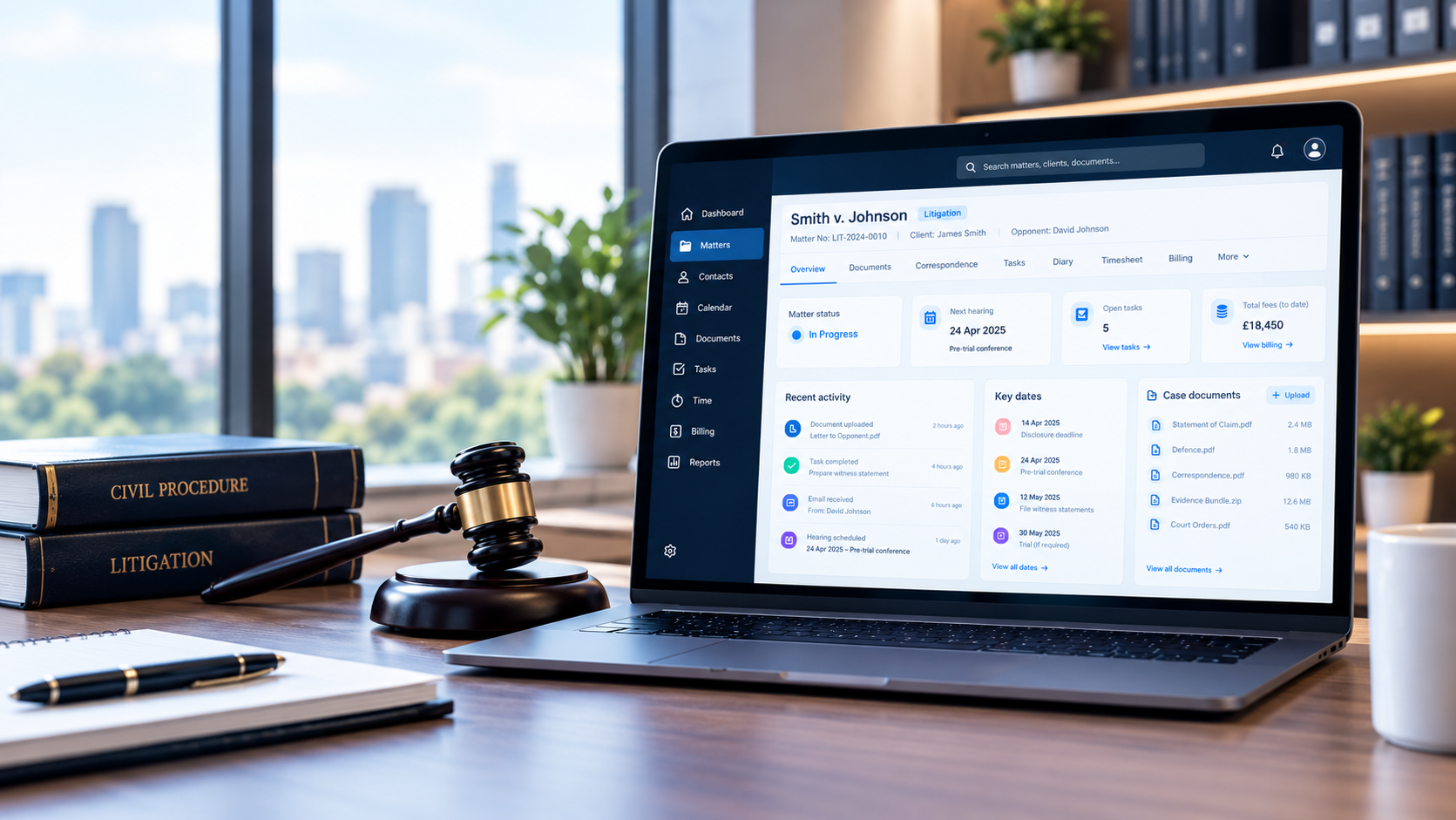
Every claim moves through stages, from the first letter to enforcement. Civil legal software should mirror those stages so that nothing depends on memory. SpineLegal tracks tasks and deadlines against each matter and alerts the right person before a date is at risk. Meanwhile, partners can see which stage each case has reached without chasing colleagues.
SpineLegal’s litigation workflows are built around CPR-based processes and court date tracking. For example, a firm can set up a workflow in which issuing a claim creates a service task, and a reminder then fires ahead of the response deadline. Fee earners assign tasks, follow progress and update the same record. Consequently, the team sees what is due this week without a separate diary.
You can read more about workflow management in law firms and advanced task management.
Civil litigation is deadline-driven. A missed date can lead to sanctions, wasted costs or a weakened claim. At the same time, each fee earner juggles pleadings, evidence, correspondence and bundles across many matters. Therefore, good software needs to do four things well:
Procedural rules differ between countries. In England and Wales, for example, the Civil Procedure Rules (CPR) set the timetable for most civil claims. Firms elsewhere can configure SpineLegal workflows around the rules of their own courts.
Customisable workflows for different case types ensure that every step—tasks, documents, deadlines—is completed consistently and efficiently.
Centralised dashboard for managing all client matters, with built-in timelines, activity logs, and linked documents, correspondence, and compliance records
Real-time KPIs on caseload, WIP, revenue, and compliance available through custom reports for partners or compliance audits.
Auto-generate legal forms, letters, contracts, and filings using dynamic templates, pre-filled with case data—saving time and ensuring accuracy.
Track time, generate fixed-fee or hourly invoices, and link billing directly to casework—complete with financial reporting and integrations to leading accounting systems.
Secure, branded portal where clients can upload documents, view case status, sign forms, and communicate—enhancing transparency and reducing inbound queries.
When you compare options, ask three questions. Does the software tie deadlines to the matter? Can it generate your court documents from your own templates? Does time recording feed billing without re-keying? Every litigation team works differently, so the best test is a demo using your own matter types. Book a no-obligation session and we will show how SpineLegal handles your deadlines, documents, billing and client updates. Bring a typical claim, and we will walk through it stage by stage.
Civil litigation software is a case management system built for contested civil claims. It keeps deadlines, documents, tasks, time records and client updates on one matter record. As a result, teams spend less time searching for information and are less likely to miss a court date. SpineLegal delivers this as a cloud-based platform for law firms.
Civil legal software should include deadline tracking, task management, document generation, secure document storage and time recording. It should also offer a client portal and reporting. In addition, look for workflows you can configure around your own court rules. Ask each vendor to demonstrate these features on a typical claim before you commit.
Yes. SpineLegal tracks tasks and deadlines against each matter and alerts the right person before a date is at risk. Its litigation workflows are built around CPR-based processes. However, alerts are reminders, not legal advice. Fee earners should still check dates against the relevant court rules and their firm's own procedures.
You can build both stages into a SpineLegal workflow, with tasks, deadlines and document storage held on the matter. Time and expense recording also gives you accurate figures when preparing or revising a budget. Because every firm's process differs, ask the team to show your preferred set-up during a demo.
Yes. SpineLegal generates court documents, letters and forms from templates pre-filled with case data, and it supports bundling documents for hearings. Every plan includes a standard template library. Custom templates are an Enterprise feature, so check which plan suits the way your firm drafts.
SpineLegal is cloud-based, so teams can access matters from anywhere with an internet connection. Firms in several countries use the platform. Because workflows are configurable, you can build them around the procedural rules of your own courts. Book a demo to discuss your jurisdiction's requirements.
⦿ Complete Legal Operations in One Platform
⦿ Automated Case & Deadline Management
⦿ Fast & Accurate Document Generation
⦿ Enhanced Client Experience
⦿ Seamless Billing and Revenue Tracking
⦿ Data-Driven Insights for Smarter Decisions
⦿ Scalable, Affordable, and Easy to Use
SpineLegal gives you more than software—it delivers control, clarity, and a path to scaling your Trademark practice with confidence.

©2026 All Rights Reserved. SpineLegal Software™
