Legal billing has long been one of the most administratively burdensome and compliance-sensitive functions in any law firm. Timekeeping errors, inconsistent invoice entries, and guideline deviations cost firms not only revenue but also client trust. In 2026, machine learning legal billing compliance tools are no longer experimental — they are becoming operational infrastructure for forward-thinking firms of all sizes.
This article explores five concrete, practical ways machine learning is reshaping how law firms manage billing compliance, reduce disputes, and maintain audit-ready records.
One of the most persistent challenges in legal billing is ensuring that every time entry complies with client-specific billing guidelines — rules that often run to dozens of pages and change regularly.
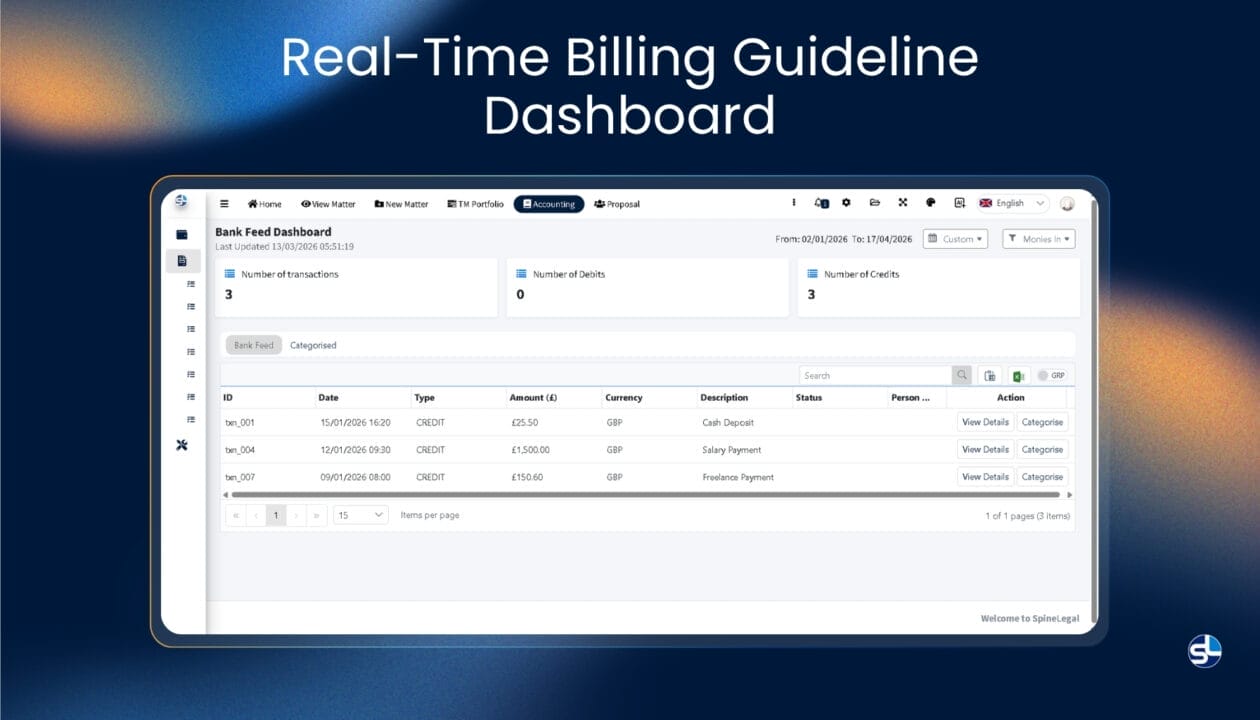
Machine learning models trained on billing guideline data can now flag non-compliant entries before an invoice leaves the firm. Rather than relying on manual review or waiting for a client’s billing auditor to raise a dispute, the system analyses each entry against the applicable guidelines in real time.
What this looks like in practice:
This kind of proactive enforcement is a significant operational shift. Firms using SpineLegal’s AI-powered billing compliance tools are seeing measurable reductions in invoice rejection rates, which directly impacts cash flow and client relationships.
Traditional billing audits are retrospective — they catch problems after invoices have already been submitted and, in many cases, after client relationships have already been strained. Machine learning changes this dynamic fundamentally.
By analysing historical billing data across matters, timekeepers, and practice areas, machine learning models can identify patterns that are statistically likely to represent anomalies. These aren’t just rule-based checks; they are probabilistic assessments based on thousands of past entries.
Common anomalies that predictive models surface include:
This capability is particularly valuable for law firm management and compliance officers who need to maintain internal billing integrity, not just satisfy external client audits.
For firms managing complex, multi-matter client relationships, tools that integrate with SpineLegal’s matter management workflows can surface these signals continuously rather than quarterly.
The quality of time entry narratives has a direct bearing on invoice approval rates. Poorly written or vague narratives are one of the most common reasons clients dispute invoices or request write-offs. Yet, improving narrative quality at scale has historically been difficult to enforce consistently.
Natural language processing (NLP) — a branch of machine learning — now enables automated narrative analysis. Systems can assess time entry descriptions for:
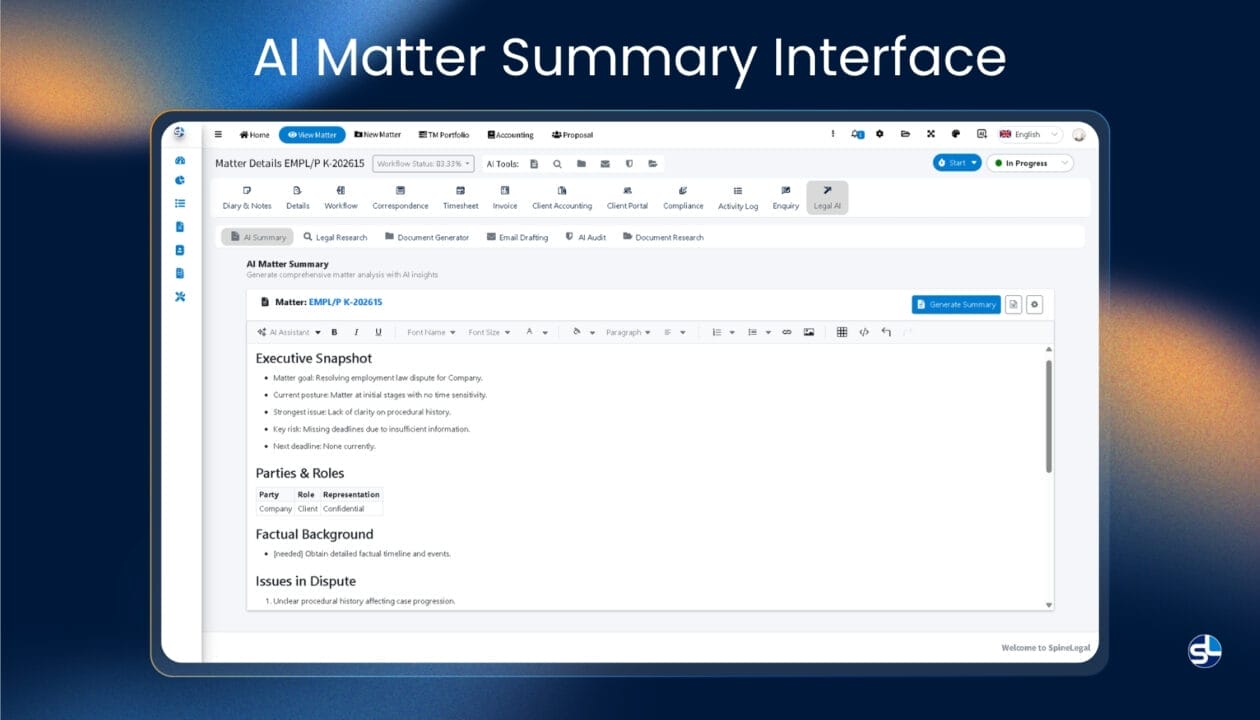
Beyond flagging poor narratives, modern tools can suggest improved descriptions, effectively coaching timekeepers to write better entries over time. This creates a firm-wide learning effect — junior fee earners improve faster, and senior fee earners maintain consistency even under workload pressure.
The Law Society’s guidance on transparency in legal billing underscores the importance of clear, accurate billing descriptions — a standard that AI narrative tools help firms meet at scale.
Rate errors — billing a client at an incorrect hourly rate, applying the wrong matter-specific rate, or failing to reflect agreed rate changes — are among the most damaging billing mistakes a firm can make. They erode trust immediately and, in regulated environments, can constitute a compliance failure.
Machine learning systems now perform continuous rate validation by:
This is particularly significant for firms operating under fixed-fee arrangements or alternative fee structures, where the boundaries between billable and non-billable work can be genuinely complex to manage.
Integrating intelligent rate validation into a firm’s existing billing workflow — through platforms like SpineLegal’s legal billing automation suite — ensures that rate errors are caught before submission, not after a client has already noticed them.
Regulatory scrutiny of legal billing practices is increasing across multiple jurisdictions. Whether in the context of corporate client billing audits, regulatory investigations, or internal governance reviews, law firms are under growing pressure to demonstrate that their billing processes are transparent, consistent, and documented.
Machine learning contributes to this through automated audit trail generation. Every compliance check, flagged entry, reviewed narrative, and rate validation event is logged automatically, creating a detailed, timestamped record of the firm’s billing review process.
Why this matters for compliance:
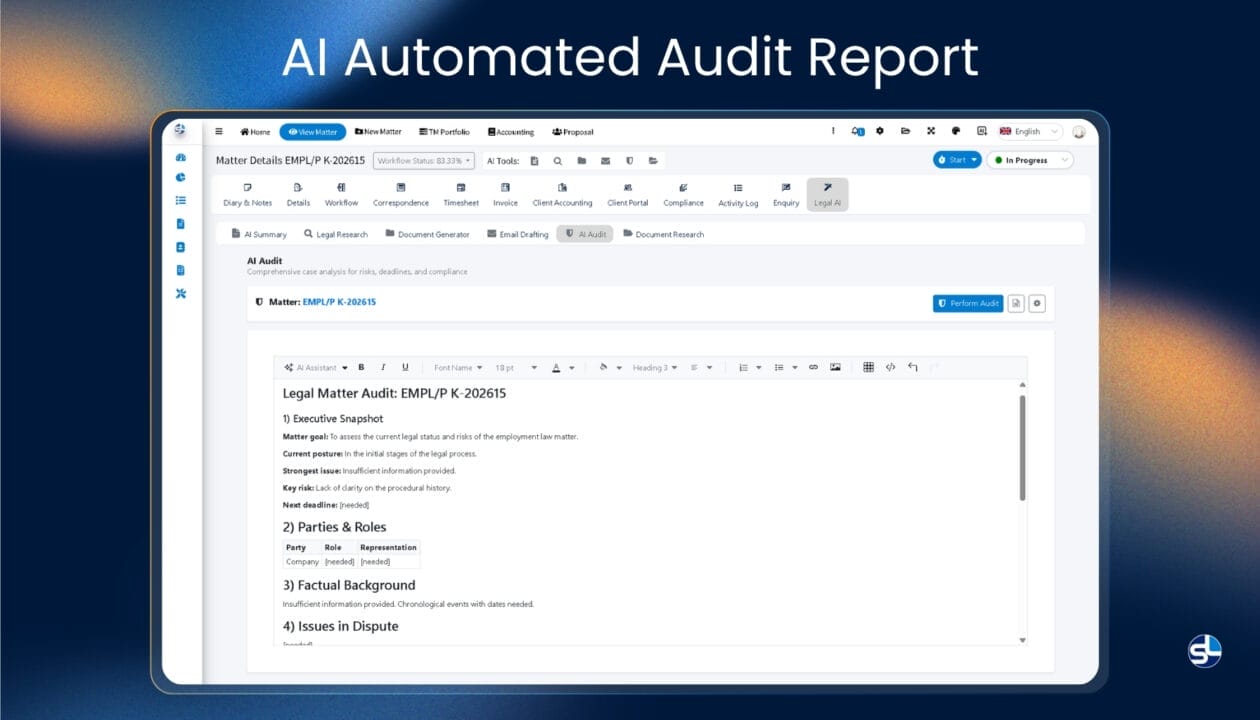
The SRA’s Transparency Rules make clear that firms must be able to substantiate the basis for their charges. Automated audit trails provide precisely this substantiation, at a level of detail that manual processes struggle to match.
For firms preparing for external billing audits or client-side outside counsel guideline reviews, SpineLegal’s compliance reporting features provide exportable, structured audit documentation that meets modern expectations.
It is worth being direct: implementing machine learning billing compliance tools is not without its challenges. Firms must invest in data quality, ensure that their existing billing systems can integrate with AI platforms, and provide fee earners with adequate training on how to work alongside automated review.
However, the direction of travel is unambiguous. Clients — particularly large corporate clients and institutional buyers of legal services — are increasingly deploying their own AI tools to audit the invoices they receive. Firms that are not using comparable technology on their own side are at an informational disadvantage when disputes arise.
Machine learning does not replace billing judgement. It augments it — catching errors that human reviewers miss, enforcing consistency that manual processes cannot sustain at scale, and generating the documentation that modern compliance environments demand.
Firms that begin building this capability now, whether through dedicated platforms or integrated modules within their existing practice management software, will be measurably better positioned for the billing environment of the next five years.
Explore how SpineLegal’s legal technology solutions support law firms in building compliance-ready billing operations from the ground up.
Ready to Make Billing Compliance a Competitive Advantage?
Billing errors, invoice disputes, and guideline breaches are not inevitable — they are preventable. SpineLegal gives law firms the machine learning tools to catch compliance issues before they reach the client, enforce billing guidelines consistently across every matter, and generate the audit documentation that modern legal practice demands. If your firm is still relying on manual review to protect billing integrity, the risk is already present. Start your free demo with SpineLegal today and see how AI-powered billing compliance can reduce disputes, accelerate payments, and keep your firm audit-ready in 2026.
What is machine learning legal billing compliance? Machine learning legal billing compliance refers to the use of AI models to automatically review, flag, and improve law firm billing entries for accuracy, guideline adherence, and regulatory transparency — replacing or augmenting manual review processes.
How does machine learning detect billing errors in law firms? Machine learning systems analyse time entries against billing guidelines, historical patterns, and contractual rate agreements. They identify anomalies such as block billing, vague narratives, rate discrepancies, and duplicate entries — often before an invoice is submitted to the client.
Is AI billing compliance software suitable for small law firms? Yes. Many AI billing compliance platforms are now available at a scale and price point suitable for small and mid-sized firms. The return on investment is typically realised through reduced write-offs, fewer invoice disputes, and faster payment cycles — benefits that are proportionally significant for smaller practices.
How does automated billing compliance support regulatory requirements? Automated systems generate detailed, timestamped audit trails of every billing review action. This documentation supports transparency obligations under regulatory frameworks and provides firms with a defensible record of their billing compliance processes in the event of a dispute or investigation.